Sunday, July 1, 2012

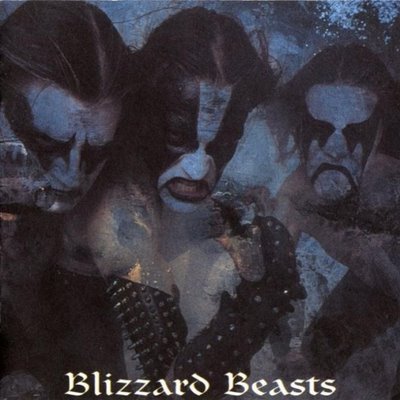
Immortal- Blizzard Beasts (1997)


Blizzard Beasts is the third and final installment in Immortal’s “holocaust metal” trilogy. The album lacks the sheer compositional brilliance of Pure Holocaust but is slightly more creative than Battles in the North. While Battles in the North opts to create the “trapped in a snowstorm” atmosphere through sheer force, Blizzard Beasts employs a little more style. Here Immortal integrates choppier death metal riffs and rhythms into the icy landscape of blackened tremolo and blast beats, resulting in a fuller, more aggressive sound. 

Blizzard Beasts consists of a series of quick hitting and concise tracks. The album’s total running time is under a half hour. If you exclude the epic “Mountains of Might” the other eight tracks are on average less than three minutes apiece. However, Immortal accomplishes a lot in short stretches of time. While the songs tend to center around crunchy lead riffs, Immortal does a nice job of seamlessly integrating lush bridges, stretches of icy tremolo and epic solos into these brief compositions. The result is an album that is quite dynamic; tracks like “Noctambulant” and the title track are absolutely smothering, while tracks like “Winter of the Ages” are shrill and frigid. Consequently, the album feels longer than it actually is—in a good way. There’s a lot to chew on for such bite size songs and a good amount of diversity throughout the recording. 

The aforementioned “Mountains of Might” is definitely the outlier. The track is a mid-tempo epic, which builds off of “Blashyrkh (Mighty Ravendark)” from the prior album. However, whereas the composition of “Blashyrkh” was a little muddled, “Mountains of Might” is brilliantly pieced together. A mournful synth intro leads to a series of glorious riffs and an awesome chant-along chorus. This song would fit in perfectly on Immortal’s next album, At the Heart of Winter and is as good, if not better than any track on that album. 

If there is a flaw with Blizzard Beasts it is that, save “Mountains of Might,” it lacks moments of brilliance. These songs will get your head banging and provide you with a few memorable hooks, but it rarely elevates to the profound heights of the first two albums. Still, Blizzard Beasts is a worthwhile closing chapter to Immortal’s holocaust metal era. 

Overall: 8.5/10

Thursday, June 28, 2012

Enslaved- Nema (1992)


Nema is the debut demo from viking black metal pioneers Enslaved. Bassist and vocalist Grutle Kjellson and guitarist Ivar Bjørnson had already demonstrated their compositional skills on the impressive Phobia demo Feverish Convulsions. Certainly, one wouldn’t have guessed that the demo was recorded by a bunch of teenagers (Ivar was 14 at the time of the recording!). That little demo revealed lots of compositional creativity and organization; and that is one of the reasons that the horrid quality of Nema is such a surprise. On Nema Enslaved sound like lost and clueless teenagers who somehow stumbled upon some recording equipment and with nothing better to do, decided to record a demo. The compositions are disorganized, the mix is awful and the execution is subpar. 

First of all, the production is really poor. Everything is very far back in the mix except the keys which are quite loud. The vocals are quiet and the guitars are weak and puttering. The performance fails to compensate. Here Enslaved are mostly playing a sort of death-doom similar to the Phobia demo. A few black metal elements have been added to the equation. Grutle’s vocals are a little more shrieked and high pitched then they were on the Phobia demo, though he still opts for a death growl now and then. Also, the keys have the sort of icy tone that is synonymous with black metal. 

There are two metal tracks on Nema and in both instances the songwriting is really poor. Whereas the Phobia demo was full of unpredictable shifts that kept a listener on his or her toes, here the twists and turns sound more like disorganization than vision. On far too many occasions the music comes to a halt mid-song as a means of creating a transition. Drummer Trym Torson doesn’t help. While Trym would go on to give some stellar performances for Enslaved and then Emperor, Nema is his first recording experience and he seems in over his head. The drums are often trailing a step behind or leaping a step ahead the rest of the band. 

There are also two keyboard pieces. The intro is overly long and tedious. The melody is terribly dull and one dimensional. Gurtle’s gurgled growls do little to add the ambiance. The outro is much better. The lead melody has the sort of mystical aura and crystalline tone that one finds scattered throughout early Enslaved recordings. 

However, if a two minute outro is the best thing about a demo, then you know things aren’t going well. For whatever reason, Enslaved really blew this first demo. Fortunately, Enslaved would step up their act on Yggdrasill and never look back. 

Overall: 3/10

Phobia- Feverish Convulsions (1991)


Grutle Kjellson and Ivar Bjørnson of Enslaved are but yet two more black metal legends that started out their careers playing death metal. Their original band, Phobia played a dark, dingy brand of doom-death metal, similar in style to very early My Dying Bride. The band also contained drummer Hein Frode Hansen, who would go on to have success with the gothic doom metal band Theatre of Tragedy. The only relic from Phobia is the demo Feverish Convulsions. Though brief—three songs totaling fifteen minutes—it is a fairly effective piece of doom-death. (All the more amazing when you consider the age of the musicians. Ivar was merely 14 years old at the time of the recording!) 

The mix is not ideal, but it is adequate. The guitars are a little far back in the mix and don’t have as strong of a punch as they should. Grutle’s deep, burly death growl is more forward in the mix, but is also somewhat muddled. Only the keys which fade in and out of the compositions possess much clarity. Still, everything is audible and it is not a struggle to make out what is going on. 

The riffs are of two kinds: there are slower, murky riffs and tight, punching tremolo passages. The band does a good job of shifting between ominous stretches of doom and more out and out attacking portions. The slower passages have good horror movie style riffs that deviously creep toward the listener like a hungry snake. The songwriting is unpredictable, with each song containing a lot of transitions and shifts in tempo, mood and intensity. Consequently, these actually have some staying power and reward multiple listens.

Feverish Convulsions is a solid piece of doom-death that demonstrates that Grutle and Ivar had some solid songwriting skills even at a young age. Had Phobia continued, they could have been an original addition to the doom-death movement of the early 90s. However, Grutle, Ivar and Hein all went on to accomplish bigger and better things in other groups. Still, if compared to first demos of other black metal legends, Feverish Convulsions is a respectable effort.


Overall: 7/10